Visitors 33
12 photos, 2 videos
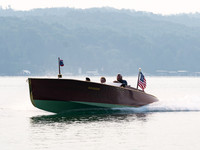
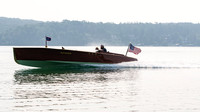
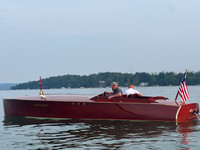
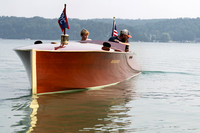
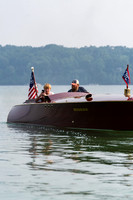
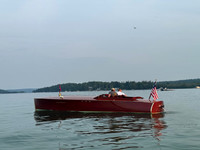
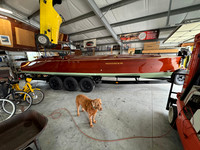
HOOSIER is the only known remaining original “Hoosier Class 28” race boat built by Hacker Boat Company. HOOSIER is believed to be originally owned by H.R. Duckwall of Indianapolis, Indiana and the Miami Beach Yacht Club. It was the fourth of his Hoosier named race boats. Originally powered by a 145-hp 6-cylinder Sterling model FS racing engine (of which none are known to still exist) it was the World Record Speed holder for “displacement” boats in 1919, documented between 34.6 mph and up to 40mph. It was the winner of the 1919 A.P.B.A. Miami Regatta and known then as the “Fastest Runabout Afloat.”
HOOSIER IV was proudly featured in many 1919-1920 motor boat publications, advertising its successes in advertisements for Sterling Engine Co, Hyde Propellers, Valspar Varnish, and of course the John L. Hacker Boat Co.
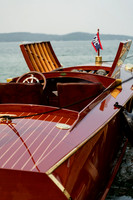
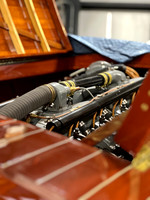
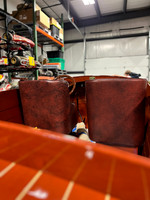
In the early 1920s, Hoosier IV was repowered with a 1,650 cubic inch World War I Liberty aircraft V-12 with a Capitol marine conversion making 450hp, as it is today. Little is known about its history between then and 1969 aside from it remaining in Indiana and at some point named The Irishman, when Mahlon Rieke from Auburn, Indiana purchased it. Rieke even wrote a boating magazine in 1969, including photos of the boat and asked for recommendations on converting the deck to a triple-cockpit arrangement, which he eventually did. Rieke renamed it MY’NEE II, with forward steering and three cockpits. Eventually the unrestored hull wound up in the collection of Minnesota collector Kermit Sutton, then sold to Liberty collector Dominic Spediachi in Idaho, unrestored in 2016. The current owners purchased boat in 2023 mid-restoration by Brian Robinson in Southern California. The 100+ year old copper-riveted hull was in remarkable condition, having been built new with extreme lightweight design and construction. Still, it was a major restoration, completed by Robinson Restoration in 2025 with the bottom completely replaced, and Honduras mahogany side planking replaced on top of original White Oak side frames. The unmolested original Poplar foredeck frames were reused, and the deck returned to its original configuration. One amazing detail is the intricate engine hatches followed the boat around its whole life, with the Liberty modifications intact, even after it was converted to a triple cockpit with new hatches.
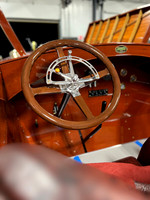
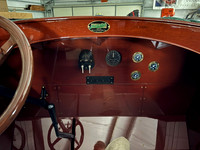
With research and documentation being paramount in this restoration, this early only-one-known Detroit-built Hacker hull, with its pre-chrome, pre-nickel polished brass hardware, original Jones-Sterling tachometer, and aluminum steering wheel/controls found in France, provides a unique example of the early days of Hacker.
Price on Request
HOOSIER IV was proudly featured in many 1919-1920 motor boat publications, advertising its successes in advertisements for Sterling Engine Co, Hyde Propellers, Valspar Varnish, and of course the John L. Hacker Boat Co.
In the early 1920s, Hoosier IV was repowered with a 1,650 cubic inch World War I Liberty aircraft V-12 with a Capitol marine conversion making 450hp, as it is today. Little is known about its history between then and 1969 aside from it remaining in Indiana and at some point named The Irishman, when Mahlon Rieke from Auburn, Indiana purchased it. Rieke even wrote a boating magazine in 1969, including photos of the boat and asked for recommendations on converting the deck to a triple-cockpit arrangement, which he eventually did. Rieke renamed it MY’NEE II, with forward steering and three cockpits. Eventually the unrestored hull wound up in the collection of Minnesota collector Kermit Sutton, then sold to Liberty collector Dominic Spediachi in Idaho, unrestored in 2016. The current owners purchased boat in 2023 mid-restoration by Brian Robinson in Southern California. The 100+ year old copper-riveted hull was in remarkable condition, having been built new with extreme lightweight design and construction. Still, it was a major restoration, completed by Robinson Restoration in 2025 with the bottom completely replaced, and Honduras mahogany side planking replaced on top of original White Oak side frames. The unmolested original Poplar foredeck frames were reused, and the deck returned to its original configuration. One amazing detail is the intricate engine hatches followed the boat around its whole life, with the Liberty modifications intact, even after it was converted to a triple cockpit with new hatches.
With research and documentation being paramount in this restoration, this early only-one-known Detroit-built Hacker hull, with its pre-chrome, pre-nickel polished brass hardware, original Jones-Sterling tachometer, and aluminum steering wheel/controls found in France, provides a unique example of the early days of Hacker.
Price on Request
© 2026 Freedom Boat Service. Proudly featuring Chris-Craft, Century, Gar Wood, Riva, Hacker & Lyman wood boats